
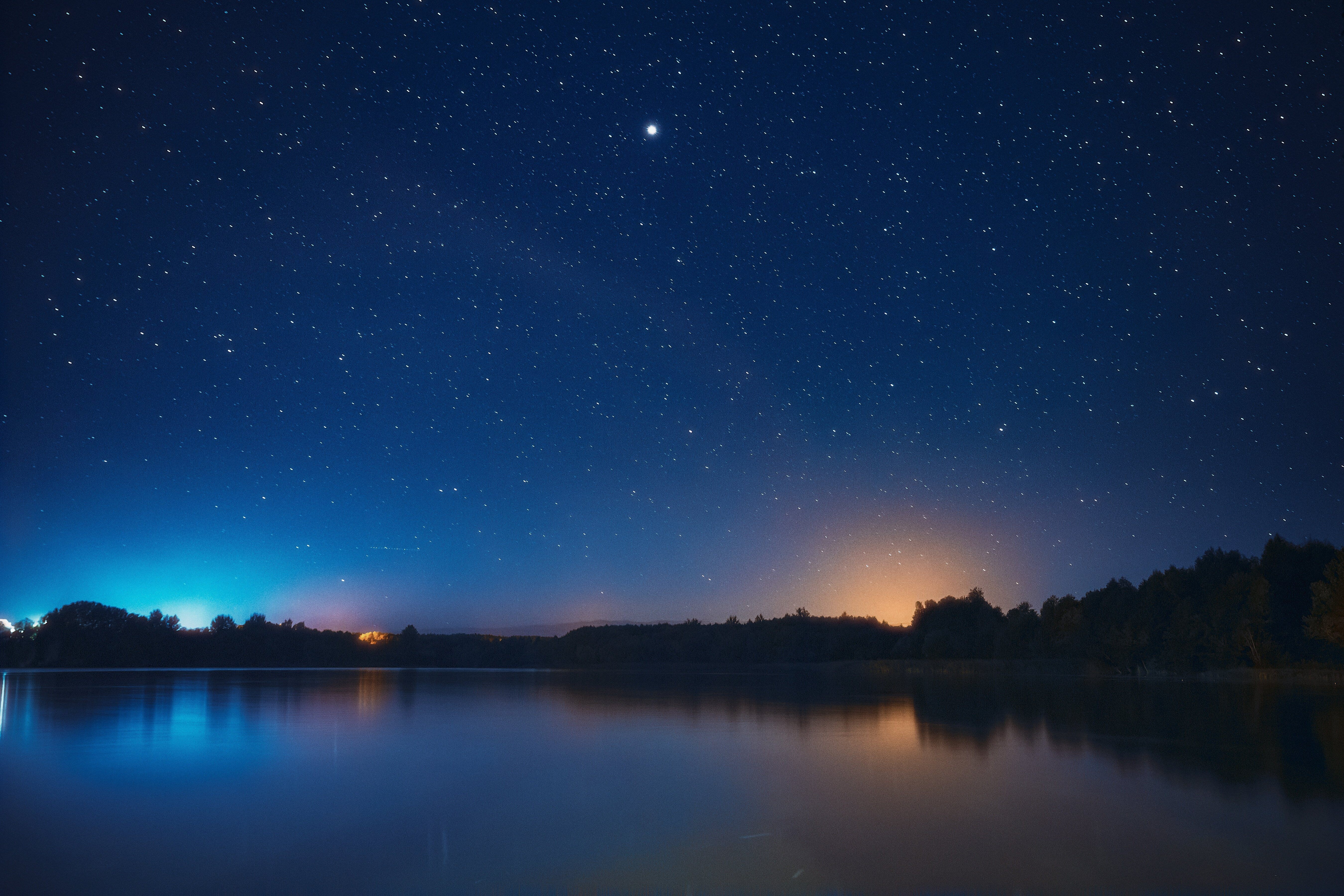
Witnessing the Natural Glory of Our Cosmic Environment
Each calendar year provides special examples of natural glory for our Earth, Solar System, and cosmic environment. Some natural displays are “subtle and muted.” Other displays are spectacular and eye-catching.
Interstellar Visitors: The Arrival of Comet 3(I) Atlas
We highlight two of the most startling examples of natural glory to appear in 2025. Here is a link to our previous post—“Comet Tales:” https://jasscience.blogspot.com/2025/12/comet-tales.html
The post reports on Comet 3(I) Atlas, a famous comet arriving from far outside our Solar System. It was discovered approaching our planetary system on July 2, 2025 from a distant star in our Milky Way Galaxy. The comet is an example of a “subtle and muted” phenomenon. Only astronomers equipped with powerful telescopes and other equipment may fully appreciate its natural glory.
Comet 3(I) Atlas traveled from a star many light years away. The nearest star other than our Sun is 4+ light years distant. In miles, that distance is over 24 trillion miles. The Milky Way, our home galaxy, is about 100,000 light years wide. A quote from the SETI Institute states Comet 3(I) Atlas’s trajectory, “…suggests that the object may have wandered through interstellar space for millions, if not hundreds of millions of years before encountering our Solar System.”
The 2025 Solar Maximum and Spectacular Auroras
Another instance of natural glory was the rare display of aurora borealis (northern lights) visible for many Earth residents late this year. These displays were “spectacular and eye catching.” The Sun experiences a solar maximum every 11 years on average: magnetic activity on the sun is at its maximum. Many natural events on Planet Earth are cyclical, repeating regularly over and over. The Creator of heaven and earth has established many cycles in nature as part of the orderliness and predictability of our cosmic environment. We mention a few life-sustaining cycles in our natural world: seasonal cycles, the water cycle, and chemical cycles (carbon, oxygen, and nitrogen cycles). Finally, a cycle related to the recent episodes of northern lights—the solar cycle.
Our Sun displays increased appearances of sunspots every 11 years. Sunspots are visible as small dark spots on the surface of the sun. These dark areas can be seen more commonly at solar maximum. They are more plentiful closer to the sun’s equator as they move with the rotating sun. This year Earth residents were treated to a glorious display of northern lights, visible after dark. Sunspots are a geo-magnetic phenomenon. At solar maximum the sun’s N-S magnetic poles reverse positions.
Coronal Mass Ejections and the Northern Lights
From the 11/11/25 article in space.com we read, “Wow, the northern lights put on a stunning display last night with auroras reported as far south as Mexico.” During the chaotic magnetic events, the Sun, composed almost completely of plasma, generated strong magnetic bursts known as coronal mass ejections (CME) which travel through space and interact with Earth’s atmosphere. Thus, we are treated to beautiful aurora borealis, better known as the northern lights.
Reflecting on Divine Handiwork in the Heavens
Why do we highlight these two examples of “natural glory? (1) Comet 3(I) Atlas enables us to access information concerning matter created billions of years ago. Our timeless Creator performed many transformational miracles in the distant past. (2) The geomagnetic northern lights event is a stunning contemporary display of God’s handiwork. Scientists are able to describe the phenomenon better than they are able to explain it.
During the startling aurora borealis light show of 11/11/25, we enjoyed a sky with beautiful hues of violet, pink, green, red, and other colors piercing the darkness of our northern sky. We were reminded of one of our favorite scripture passages: “The heavens declare the glory of God, and the sky above proclaims his handiwork.” Psalm 19:1 ESV
Go Deeper

Jim Virkler
Jim Virkler is a retired high school science teacher who writes extensively on the harmony between scientific discoveries and the Christian faith.
Leave a comment