

Defining the Aseity of God
God’s self-existence is also referred to as His aseity.[1] Now, that word is probably not part of the average person’s vocabulary, so what does it mean? It comes from the Latin “a se,” meaning “from himself.” Dictionaries explain aseity as:
-
the quality or state of being self-derived or self-originated.
-
the traditional divine attribute whereby God is said to exist of or from himself.
-
existence originating from and having no source other than itself.
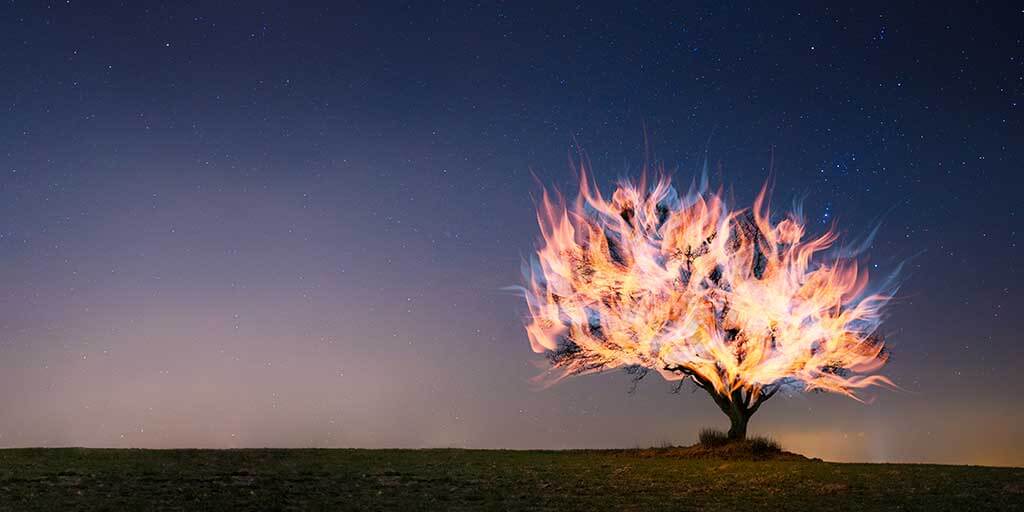
Basically, what it means is that God is. He simply is. He had no “cause,” and there is nothing and no one that He needs in order to be, or to continue to be. Hence the name He gives to Moses at the burning bush: “I AM” (Exodus 3:14).
Biblical Evidence of Divine Independence
Several Scriptures express this truth about God. For example (emphases added):
-
Psalm 90:1-4 – Lord, you have been our dwelling place throughout the generations. Before the mountains were born or you brought forth the whole world, from everlasting to everlasting you are God. You turn people back to dust, saying, “Return to dust, you mortals.” A thousand years in your sight are like a day that has just gone by, or like a watch in the night.
-
Psalm 102:25-27 – In the beginning you laid the foundations of the earth, and the heavens are the work of your hands. They will perish, but you remain; they will all wear out like a garment. Like clothing you will change them and they will be discarded. But you remain the same, and your years will never end.
-
Isaiah 40:28-31 – Do you not know? Have you not heard? The Lord is the everlasting God, the Creator of the ends of the earth. He will not grow tired or weary, and his understanding no one can fathom. He gives strength to the weary and increases the power of the weak. Even youths grow tired and weary, and young men stumble and fall; but those who hope in the Lord will renew their strength. They will soar on wings like eagles; they will run and not grow weary, they will walk and not be faint.
Matthew Barrett explains,
“Uncaused, his existence is grounded in himself alone. That means not that he created himself or caused himself to be but that he alone, as Anslem says, ‘has of himself all that he has, while other things have nothing of themselves. And other things, having nothing of themselves, have their only reality from him.’”[2]
In his article, “The Eternality and Aseity of God,” John Frame declares, “God’s aseity means that he is sufficient to himself, independent of anything outside himself…. God is not in any way dependent on anything outside himself, but he has sufficient resources within himself for all that he is and does.”[3]
And Dr. William Lane Craig explains:
“The Bible is affirming that God is a self-existent being. Minimally that would mean that God doesn’t depend upon anything else for his existence. If everything else were magically to disappear, God would still be there. He exists independently of anything else….
“Aseity means that God exists by a necessity of his own nature. That is to say, it belongs to God’s very nature to exist. He doesn’t just happen to exist and happen to be independent of everything else. Rather, God exists by a necessity of his own nature. So if God’s nature is possible—if it is logically possible for God to exist—then he exists. He exists by a necessity of his own nature.”[4]
This is the God of whom the psalmist spoke when he wrote, “Before the mountains were born or You gave birth to the earth and the world, even from everlasting to everlasting, You are God” (Psalm 90:2)!
And J.I. Packer explains, “Our Maker exists in an eternal, self-sustaining, necessary way—necessary, that is, in the sense that he does not have it in him to go out of existence.”[5]
The Implications of a Self Existent Creator
But let’s make this personal. What difference does it make for me to know that God is self-existent? First, I need to recognize that God does not need me. I am not necessary to His existence in any way. He would still “be” even if I had never been born.
A.W. Tozer expresses it this way:
“Teach us, O God, that nothing is necessary to Thee. Were anything necessary to Thee that thing would be the measure of Thine imperfection: and how could we worship one who is imperfect? If nothing is necessary to Thee, then no one is necessary, and if no one, then not we. Thou dost seek us though Thou does not need us. We seek Thee because we need Thee, for in Thee we live and move and have our being. Amen.”[6]
The same truth is expressed by the apostle Luke in Acts 17:24-25: “The God who made the world and everything in it is the Lord of heaven and earth and does not live in temples built by human hands. And he is not served by human hands, as if he needed anything. Rather, he himself gives everyone life and breath and everything else.”
God did not create human beings because of some need. He wasn’t lonely; He didn’t need the companionship of humans; He didn’t and doesn’t lack anything that humans can supply to Him.
Matthew Barrett describes one disturbing trap we may fall into if we neglect this truth. Speaking of God’s role as Israel’s covenant Lord and Savior, he explains:
“But here’s the problem, and it’s a big one: Israel thinks that God needs her sacrifices and therefore she can use her sacrifices to bribe God! Notice how the Creator of the universe responds to his covenant people [Psa. 50:9-12; cf. 146:5-7]. The point is clear: the Creator needs nothing, for he owns everything.”[7]
Are you guilty of the same thing? Do you give to charity, or perform some act of service with the thought in mind that God will reward you? NO! God cannot be bribed. And, in fact, Job’s “friend” Elihu had it right when he asked, “If you are righteous, what do you give to him? Or what does he receive from your hand?” (Job 37:5). And the answer, of course, is nothing. He needs nothing from you.
I can’t help but think of Romans 11:35 where Paul asks, “Who has ever given to God, that God should repay them?” That’s a profound truth that we would do well to remember.
Our Absolute Dependence on God
But there’s a flip side, a second takeaway that we should equally keep in mind, and that is that we desperately need God. For everything. This is expressed in Acts 17:28 where we are told, “In Him we live and move and have our being.”
-
Deuteronomy 30:20 – “For the Lord is your life,…”
-
Job 12:10 – “In his hand is the life of every creature and the breath of all mankind.”
-
1 Corinthians 8:6 – “For us there is but one God, the Father, from whom all things came and for whom we live; and there is but one Lord, Jesus Christ through whom all things came and through whom we live [exist].”
-
Colossians 1:16-17 – “For in him all things were created: things in heaven and on earth, visible and invisible, whether thrones or powers or rulers or authorities; all things have been created through him and for him. He is before all things, and in him all things hold together.”
Matthew Barrett says, “If we are to continue living, the God of the universe must sustain us. We are dependent on not only our earthly father but our heavenly Father too. Our nature, our very existence, is contingent in every way.”[8]
At the website gotquestions.org, we read this encouraging statement:
“Because of the aseity of God, we can depend upon Him as the independent One who is able to deliver, protect, and keep those who trust in Him. Those whom God has purposed for salvation will come to Christ, and nothing can hinder them: “All those the Father gives me will come to me, and whoever comes to me I will never drive away” (John 6:37).”[9]
While far, far more could be said about God’s self-existence and the implications for us, perhaps we can summarize by quoting from the prophet Isaiah, who truly understood the implications of God’s aseity:
“Do you not know? Have you not heard? The Lord is the everlasting God, the Creator of the ends of the earth. He will not grow tired or weary, and his understanding no one can fathom. He gives strength to the weary and increases the power of the weak. Even youths grow tired and weary, and young men stumble and fall; but those who hope in the Lord will renew their strength. They will soar on wings like eagles; they will run and not grow weary, they will walk and not be faint.” (Isaiah 40:28-31)
Endnotes
- The material in this article was previously published as a two-part article entitled “The Aseity of God.” It has been slight modified. ↑
- Matthew Barrett, None Greater (Baker Publishing Group, Kindle Edition), p. 57, quoting Anselm, On the Fall of the Devil 1 (Major Works, p. 194).] ↑
- John M. Frame, “The Eternality and Aseity of God,” thegospelcoalition.org. ↑
- William Lane Craig, “Doctrine of God: Divine Aseity,” reasonablefaith.org. ↑
- J.I. Packer, Concise Theology: A Guide to Historic Christian Beliefs (Tyndale House Publishers, Kindle Edition), p. 26. ↑
- A.W. Tozer, “The Self-sufficiency of God,” https://www.monergism.com/self-sufficiency-god. ↑
- Matthew Barrett, None Greater (Baker Publishing Group, Kindle Edition), p. 51, emphasis added. ↑
- Barrett, op. cit., p. 56. ↑
- Gotquestions.org/asciety-of-God.html ↑
Go Deeper

R.L. Wilson
R.L. Wilson has been on staff at the Ankerberg Theological Research Institute since 1982. Wilson’s articles draw from the perspective of someone who grew up in a multicultural environment, and who has been a follower of Christ for many decades.

.webp)
Leave a comment