
.webp)
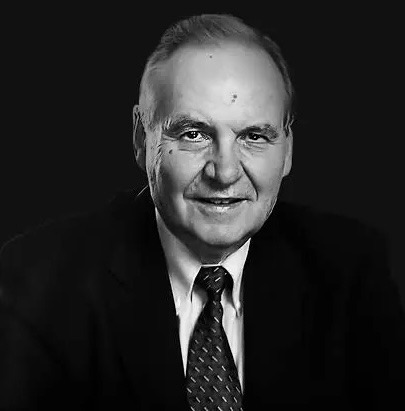
With John Ankerberg, Dr. Norman Geisler, author of If God, Why Evil?, and Rabbi Harold Kushner, author of When Bad Things Happen to Good People.
(continued from Part 1)
Do We Have Authoritative Information About God?
Dr. John Ankerberg: Harold, if I could ask you this: do we have any authoritative information from God about God, as far as you’re concerned?
Rabbi Harold Kushner: My tradition teaches me that theology is not about the nature of God. There’s something a little bit arrogant about sitting around and talking about whether God is immanent or transcendent. Then when somebody says, “It’s 9:30, our babysitter has to go home,” we vote and we determine God’s nature. No, I believe that we have authoritative information, not about the nature of God, but about the will of God, about how God wants human beings to live. For me that is the content of revealed Scripture—not what God is, but what God demands of us.
Dr. John Ankerberg: Okay, Norman, do you want to respond?
Dr. Norman Geisler: Just quickly to hitchhike on what he said, I think that we have authoritative information about God’s will and about God’s nature. Indeed He revealed who He was. He is a great God. He’s referred to some 48 times in the Old Testament as the Almighty, which is why I believe that God is all-powerful, as well as many other Scriptures. But I think if we only had information about God’s will, it would still tell us something about His nature, because you can’t know really about the will of somebody without knowing at least something about their nature.
Rabbi Harold Kushner: For sure. I’d agree with that. That is, when we know that God wants us to be compassionate, that God wants us to be honest, that God wants us to be self-controlled, that tells us a great deal about our nature. When we’re told that all human beings are fashioned in the image of God, not physically but in terms of our moral capacity, that tells us by reflection something about the nature of God. But it’s always in terms of how human beings catch and shape divinity and reflect it.
Did God Create Evil?
Dr. John Ankerberg: I guess, Dr. Geisler, everybody would like to believe that God is all-powerful and all-loving, and hold those together, but let’s get down to it. I think Rabbi Kushner would agree we’ve got to answer some solid questions here. Number one is God did create everything. You’re not saying that evil is an illusion; then evil exists. Did He create that? If so, He’s responsible.
Dr. Norman Geisler: I think I would have to answer something like Saint Augustine did around 400 AD, that to say that “God created everything; evil is something; therefore, God created evil,” is to miss the real nature of evil: evil as a privation or a lack. Evil is like rust to a car or rot to a tree. It’s a kind of parasite. It exists only in something else. God created the good natures and evil is a corruption of those good natures. So God did not create evil. But nevertheless evil is real. Evil is like being maimed. You don’t have an arm, but it’s real not to have an arm.
Dr. John Ankerberg: Rabbi Kushner, you said something like that in your book, but where do you differ at that point?
Rabbi Harold Kushner: I would go along and say that God created the possibility of evil. That is, when God permitted human beings to evolve morally free so that anybody had the power to rob a bank, the power to break a window, He made evil possible without mandating the individual robbery, the individual vandalism.
I believe when God created a world of natural law so that the law of gravity is not arbitrary, He created the possibility of harm to people who deserve better. When He created the whole meteorological system so that there are earthquakes, there are hurricanes, He created the danger that innocent people would be hurt, without decreeing that a certain coastal town will be flattened on a certain autumn day by a certain hurricane.
I don’t hold God responsible for individual incidents of evil. I do believe He created a world. The only world He could have created for the maximum good was a world in which evil was at least possible, because if you don’t have the possibility of evil then there’s no good. There is only necessity.
Is God Bound by Natural Law?
Dr. John Ankerberg: Dr. Geisler?
Dr. Norman Geisler: I would agree with that, that without the fact of freedom there is no possibility for evil, and there is no possibility for evil without the fact of freedom. I think the difference probably comes in this idea of natural law, whether God’s hands are tied by the laws He made, or whether God transcends the laws He made. It seems to me that if He created the natural laws, then He transcends them and can, from time to time, intervene. To have nature or the chaos or the void more powerful than God is to make God, who created them, finite, and the laws, which He created, all-powerful.
Dr. John Ankerberg: Now, Harold, why would you say that you do not accept the idea that God is above that, but also can intervene into nature?
Rabbi Harold Kushner: On moral grounds, John. Because if God has the power to spare the life of a person dying of terminal illness and chooses not to, I have affirmed His power at the cost of His goodness. For a child to be born hopelessly retarded, for a young man to be struck down with multiple sclerosis, and to know that God, even if He didn’t send it, God has the power to work a miracle and chooses to withhold that miracle, God is morally deficient if He does that. Had I believed that God could have made my son whole, and for whatever elaborate, intricate theological reasons chose not to, I would stop worshipping God that moment. He would be a morally deficient God.
By What Standard Do We Judge God?
Dr. John Ankerberg: Dr. Geisler?
Dr. Norman Geisler: Well, my response to that would be when you say God is morally deficient or He is imperfect, you must have some standard by which you’re judging God to be imperfect. Now, if there is some perfect standard beyond God by which He is judged to be imperfect, then that standard is ultimate and by definition would become God. This is the same thing that led C. S. Lewis, the former Oxford atheist, to become a believer. He said, “I realized I was arguing in a circle. I was saying God is imperfect, but I had a standard of perfection beyond God by which I was measuring Him. But if that ultimate standard of perfection was that by which I measured God, then God wasn’t God. It was the ultimate, therefore it was God.” So I would like to know from Rabbi Kushner, what’s this ultimate standard of perfection by which he measures God to be imperfect?
Rabbi Harold Kushner: No. I believe that God is morally perfect. I believe that God wills only good, and caring, and compassion. I believe that God is limited in power, because I don’t believe that perfect power is such a big deal. The president said a couple of weeks ago that any jackass can knock down a barn; it takes a carpenter to build it. It doesn’t take a whole lot of greatness to destroy. Any jerk with a gun can kill somebody. That doesn’t require a whole lot of power to kill, to take life. To create life is a divine miracle.
I see the perfection of God in a moral direction and when I do see innocent people suffering, I’m prepared to qualify His power, to compromise His power, because power…. I don’t deify power. I don’t think power is absolutely divine. I deify goodness. God is the perfect good, and I try to model myself as a good person after that. I don’t strive to become totally powerful in the image of an all-powerful God.
What Does It Mean to “Forgive God”?
Dr. Norman Geisler: Well, then, I misunderstood your book, which I’ve read carefully a number of times. I thought you said God was limited in love as well as power; that God was imperfect and, therefore, we had to forgive Him because He was limited in His love and perfection.
Rabbi Harold Kushner: Okay, let me try and clarify that. No, I don’t believe God is limited in His love. I believe that to forgive God means to get over our anger at God that He made a less than perfect world. Perhaps God could have created a perfect world, but perhaps God loves goodness more than He loves perfection. And perhaps God realized that if He made a world where the right thing would always happen, there would be no goodness. There would be no free human moral choice in it. And so at tremendous risk to His creation and His creatures, God created a world where goodness would not happen unless one of us made it happen. Sometimes we are hurt very painfully because of that decision of God’s, and that’s where we have to forgive Him, for leaving us vulnerable in an imperfect world.
Dr. Norman Geisler: So you’re saying God is infinite in love.
Rabbi Harold Kushner: I believe that. I choose to believe that.
(to be continued in Part 3)
.webp)


.webp)



Leave a comment