
.webp)
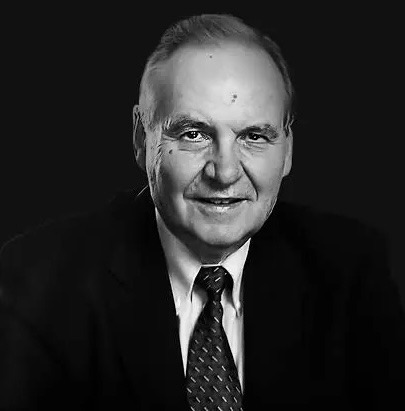
With John Ankerberg, Dr. Norman Geisler, and Rabbi Harold Kushner
Dr. John Ankerberg: Why do bad things happen to good people? We have as our guests two distinguished men who are going to help us answer that question. Rabbi Harold Kushner has written the bestselling book, When Bad Things Happen to Good People. With him is Dr. Norman Geisler, author of If God, Why Evil?
We’re going to discuss the fundamental questions that get down to the foundation of life, such as: Is there a God? If there is, what kind of a God is He? By what rules is He running the game of life? Is He free or is He handcuffed by His own universe? Is He working out a plan or is He so limited that He can’t intervene in the affairs of life? Does it do any good to pray? Do we have any authoritative information from God about God, or must we settle for our own limited conclusions? Our purpose is to have a discussion that will give information that will help people that are hurting.
Rabbi Kushner, I’m going to come to you first, with the first question. We’re glad that you’re here!
Rabbi Harold Kushner: Thank you.
Rabbi Kushner: Why I Came to Believe God Is Limited
Dr. John Ankerberg: You said in your book that you did not set out to write a book that would defend or explain God. You said, “I am fundamentally a religious man who has been hurt by life, and I wanted to write a book that could be given to the person who has been hurt by life, by death, by illness or injury, by rejection or disappointment, who knows in his heart that if there is justice in the world, he deserved better.” You say, “I want to answer the question: What can God mean to such a person?” Then you answer your own question by stating your son’s tragedy compelled you to rethink everything you had been taught about God and God’s ways. And you state that now you have come to believe that God is limited. He is loving but not all-powerful. There are some things God does not control because He cannot control them. He is not perfect, and we must first forgive Him for not making a better, more perfect world.
What I’d like to ask you in starting is, tell us why, right now, this new view of yours of God offers you a more acceptable explanation of why your son tragically died?
Rabbi Harold Kushner: John, as I watched my son decline and die the day after his 14th birthday from progeria, I was so full of anger and pain at the unfairness of it all. If I thought that God was inflicting this on an innocent child, I could not have worshipped that God. I might have been afraid of Him; I could not have loved Him. It was very important for me to believe for myself and to share with others the belief that God is not our judge, He is our friend. That God doesn’t want children to suffer and die. God doesn’t want planes and automobiles to crash or hurricanes to wipe out communities. God stands for what is good, what is loving, what is constructive, and not for pain and destruction.
Dr. Geisler: Why a Limited God Cannot Help Us
Dr. John Ankerberg: Okay, Dr. Geisler, let me just come to you. We have disagreement of opinion tonight. That’s why we have a discussion. I think that we’re all good friends and friends can sometimes disagree. Let me come right to the point of where you disagree with Rabbi Kushner. In your book you have stated, “A God who is not all-powerful is really an impossibility, religiously unworthy, and ethically demoralizing for people who are struggling against evil.” Why did you say that? Why do you believe that?
Dr. Norman Geisler: Well, I think first of all we all have to identify with the dilemma, the painful dilemma, that people have who go through suffering like this. I certainly identify and sympathize with the Rabbi and his situation. Our best friend’s daughter was stabbed to death by a rapist, and you can’t help but ask yourself, “Why do these things happen and what kind of God, if any, is there in the universe?”
But I take comfort in the fact that there is a God who controls the entire universe, who is not caught unawares, who sees the end from the beginning, as Isaiah the prophet said [Isaiah 46:10], who’s in sovereign control of the universe, as Job concluded in the end of his book, that God can do anything [Job 42:2], and who, although He permits suffering, does not promote it.
There’s a big difference between beating your head on the wall because it feels so good when you stop, which of course we don’t do, and permitting an operation, the pain of an operation, in order to achieve the greater good that results from it. Job himself said, “When He has tried me, I shall come forth as gold.” [Job 23:10]
I admired Rabbi Kushner’s testimony in the end, where he said he was a better man for having gone through this experience even though he would not have chosen to have done it himself. I think that God has that kind of purifying purpose in our life as He permits evil for our good. And we in our freedom sometimes bring destruction on ourselves, but God in His gracious love works all things for good to those who love Him [Romans 8:28].
Does God Inflict Suffering, or Permit It?
Rabbi Harold Kushner: Norm, I think this is exactly the point at which you and I differ. I like the way you’ve presented your case. Let me say where I differ with it. You’re right. I feel I’ve become a more sensitive person through the experience of watching my son decline and die. But I cannot believe that his illness and death were God’s will. This instrumental view, this idea that God would pervert one life so someone else would grow through the experience, I cannot accept that about God. It would be immoral if a human being did that—used the person for someone else’s benefit. How could we hold God responsible for hurting one person so another person would be sensitized?
Dr. Norman Geisler: I think perhaps the key difference in our view is that you use the word “inflicted” as though God had punished people. That is not necessarily divine infliction. It’s a divine permission. It’s a loving God who gives people free will, who created a world in which they had free choice to either love Him or hate Him; to blaspheme Him or worship Him; in which they chose to rebel and as a consequence of their rebellion, as is recorded in Genesis 3, sin and death and sickness and the kind of world we live in resulted. And as God looks down on that world, He patiently, lovingly works with people in the context of their freedom to bring them to a greater good. And He permits this to happen because it is the consequence of freedom, and nevertheless He is going to bring a greater good out of it, as Job said, “When He has tried me, I shall come forth as gold.” [Job 23:10]
Can God Intervene? The Heart of the Disagreement
Rabbi Harold Kushner: I think there’s not a single word in there that I would have disagreed with. Let me see if I can clarify the difference further. When you say that human beings are free and that God permits us to hurt each other, does that imply that God cannot stop the murderer from shooting the bullet? That God cannot stop the rock from falling on the passing pedestrian? That God cannot stop the cancer germs from causing a person to die?
Dr. Norman Geisler: As I understand your view, that’s what you’re saying.
Rabbi Harold Kushner: That’s what I’m saying. What do you say, Norm?
Dr. Norman Geisler: And I’m saying that the God of the Bible is a supernatural God, who created the world out of nothing. He created the heavens and the earth. He intervened in the Prophets in the Old Testament. He intervened in His Son in the New Testament, and resurrected Him from the dead to confirm that He was indeed the Messiah and that He can and does supernaturally intervene. And what gives me hope is that God has involved Himself in the world personally. He has taken on, in the person of His Son, suffering, and He has promised a final triumph over this and, therefore, I can have hope.
(to be continued in Part 2)
.webp)


.webp)





Leave a comment