
-1.webp)
Ed. Note: This article has been excerpted from our series, “Evidence for the Historical Jesus,” and has been slightly edited for publication.
In the last few years, if you have read any of the comments from scholars from the far left, they have grudgingly claimed that we have very little historical evidence for Jesus’ life, and His death, but they claim the apostle Paul was the one who invented the deity of Christ. They are dead wrong. Dr. Habermas explains why these historical facts lay a sound foundation about Jesus that goes back to the early eyewitnesses.
The Timeline of First Corinthians 15
Dr. Gary Habermas: Let’s talk about why this is so important in terms of history. 1 Corinthians 15 is nearly a given, even from people like G.A. Wells and Michael Martin who say that Jesus probably never lived. Paul said, “I delivered unto you the gospel which I also received: Christ died for our sins, was buried, rose again the third day.”
Now why is this so important? Let’s see what this looks like on a timeline. Let’s picture, between my hands here, 25 years: 30ish AD—the cross of Jesus; 55 to 57ish AD—the writing of 1 Corinthians. And it really doesn’t make a difference if you’re liberal or conservative here, these dates remain within a year or two the same. Now, Paul wrote this in 57. He said, “I delivered it to you orally when I came to you.” When was that? About 51. Now, notice, we’ve closed the gap from 25 years to 20 years—30ish to 51.
Paul's Investigation in Jerusalem
Then he said, “I delivered unto you that which I also received.” Now, the $10 million question here is, “When did Paul receive that material, and from whom did he receive it?” There’s five steps here: the book, the oral testimony, the cross down here, and we have two to go. From whom did Paul get it and when? And, of course, those people had it before he did.
Now, scholars—critics, not evangelicals—who answer this question generally say the following: Paul received this material in Jerusalem from Peter and James the brother of Jesus about 35 AD. How do you get that?
Well, if the cross was about 30, Paul believed he saw the risen Jesus just one to two years later. He said in Galatians 1—that’s taken as an authentic Pauline book—he went away for three years, came back to Damascus, then he went up to Jerusalem. Three plus two: five years. If he was saved one year afterwards, it’s one plus three: four years afterwards. But 35 is a nice round figure. So you’ve got the cross about 30; the book written about 57; oral testimony about 51. He said he came to Jerusalem in 35, and he said, “I spent time, 15 days, with Peter and with James the brother of Jesus.”
Now, there’s a Greek word there. In English it says, “He got acquainted with Peter” or “He saw Peter” or “He questioned Peter.” The Greek word is historeo. The root word is histor when transliterated into English, and it’s the root word for our word history. Historeo used in documents outside the New Testament—Greek papyri of the time—is used of explorers and people who were mapping, say, in one case, a river. And when I map this river, what am I going to do? I’m going to show you the twists and the turns. I’m going to show you the rapids; the shallow areas; the place where you can take your boat across; the deep areas; the bends, the rocks, the trees, everything. And that’s called histor.
One critical, not evangelical, essay, which is sometimes called the most authoritative one on that word in Galatians 1:18, says that “Paul played the investigative reporter.” Now, if he went up to Jerusalem around 35 AD, met with Peter and James the brother of Jesus, played the investigative reporter, there’s one other thing to learn. What did they talk about? And you know the old rule of literary criticism: we interpret a passage in its context. And the passage before and the passage right after says Paul was talking about the nature of the gospel.
Confirming the Gospel Message
And, you might think this: what else would he more want to talk about than the nature of the gospel? He goes all this distance. He comes to Jerusalem. He meets with the head apostle. He meets with the brother of Jesus. What would your first question be? I think just normally Paul would ask about the gospel. But that is the context, and Paul is saying, “Tell me about what happened here.”
Now, in Galatians 2, when he comes back up 14 years later, he says specifically, “I came up to check my gospel out,” Galatians 2:2. “I came to see if I was running or had run in vain.”
So now Paul is looking for the apostles to, as the passage says later, “give him the right hand of fellowship;” to say, “Paul, you’re right on the money. Jesus called you on the way to Damascus; He gave you the gospel to the Gentiles; go for it.” And that’s basically what they did.
The Immediate Proclamation of the Resurrection
Now, back to the original point there. 1 Corinthians—57; oral preaching—51; cross—30. That’s already only 20 years, and that’s very early. But Paul got it from somebody else, perhaps Peter and James at 35 AD. Now, if Peter and James gave it to Paul, they had it before Paul. But nobody picks a date for when this data became formalized to 1 Corinthians 15. Do you know why? We’re already on top of the cross. Paul gets it about five years later. So what this shows is the resurrection proclamation and the gospel as a whole, which includes at least the deity, the death, and the resurrection of Jesus, its proclamation is immediate.
You see, a lot of evangelicals even stumble when they say, “Yes, we preached it immediately. We find it in 1 Corinthians and it’s 25 years later.” Why don’t we say Paul received it perhaps five years later and somebody had it before he did?
Now, this is one of the paths to the fact that the content for the gospel—in particular, the deity, death and resurrection of Jesus—are linked to strong historical grounds, and critics will give you those texts in Galatians 1, Galatians 2, 1 Corinthians 15. Again, we are on strong historical grounds here.
Go Deeper
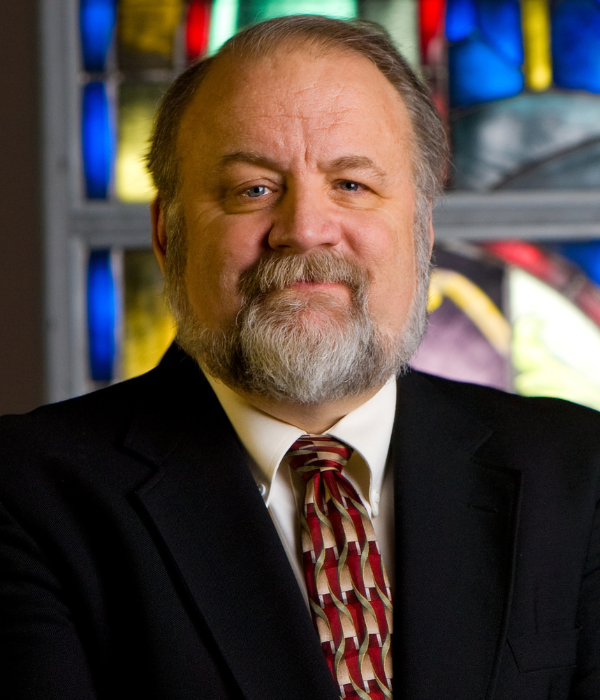
Dr. Gary Habermas
Gary R. Habermas is a New Testament scholar, theologian and expert on the evidence for the resurrection of Jesus. He serves as the distingished research professor of apologetics and philosophy and chairman of the department of philosophy at Liberty University. He has degrees from The University of Detroit (MA) and Michigan State University PhD). His works include Ancient Evidence for the Life of Jesus: Historical Records of His Death and Resurrection, The Thomas Factor: Using Your Doubts to Draw Closer to God, and The Risen Jesus & Future Hope.



Leave a comment