
.webp)
Occult symbols that once belonged to hidden societies and old spellbooks are no longer confined to the shadows. Today, they appear on clothing racks, home décor, jewelry, tattoos, and social media feeds. What once felt fringe has become familiar—and often fashionable.
Far from disappearing, spirituality has been repackaged and popularized. But as these symbols go mainstream, an important question remains: What do they actually mean—and how should Christians respond?
Symbols Aren't Neutral, Even When They’re Casual
In modern culture, the same symbol can function very differently depending on intent, understanding, and context. Some people wear symbols purely for aesthetic reasons. Others are searching—hoping for protection, healing, identity, or power. And some intentionally use symbols as part of a spiritual system.
These differences matter for how we respond to people—and for how we evaluate symbols themselves. Symbols communicate. They carry histories, spiritual frameworks, and claims about reality, even when the wearer doesn’t intend to make a statement. But not all symbols communicate the same thing in every context.
Some symbols have one clear meaning—they signal a specific spiritual commitment regardless of how they're used. Others are more flexible, shifting meaning based on setting, marketing, and intent. A symbol might be innocent decoration in one context and a spiritual tool in another.
This is why discernment is essential. We must learn to recognize when a symbol has one fixed meaning, and when context genuinely changes what it communicates.
When You Encounter These Symbols
When deciding how to respond to symbols you see, wear, or purchase, ask a few important questions:
- What does this symbol communicate? Even if you mean it casually, what message does it send?
- What is it connected to? Is it decorative, or is it marketed as spiritually active?
- What is my intent? Am I looking to this object for protection, power, guidance, or identity?
- What is the fruit? Does it draw me toward peace and trust in God—or toward fear, control, or fascination with things that are apart from God?
And when it comes to other people: you can’t always know intent at a glance. A single symbol may be aesthetic, but repeated or clustered symbols can signal deeper engagement. When you see this, ask about it.
Three Examples to Practice Discernment
Here's how those questions apply to symbols you're likely to encounter. Notice that not every symbol requires working through all four questions—some fail immediately.
1. The Pentagram
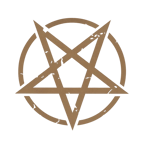
What does this communicate? The pentagram (five-pointed star) is the primary symbol of Wicca and modern witchcraft. It openly declares alignment with occult practice and the claim that humans can command elemental forces apart from God.
This symbol fails the first question. Because it overtly communicates an occult worldview—self-divinization, elemental mastery, and ritual power—there's no need to continue evaluating. Whether someone wears it "just for the aesthetic" or with full spiritual intent, the symbol itself makes a claim that contradicts biblical faith.
Verdict: Avoid. This is not ambiguous.
2. Crystals
What does this communicate? When crystals are simply displayed as natural beauty, the message may be neutral. But when marketed for "cleansing energy," "manifesting peace," or healing, they communicate that power resides in objects rather than in God.
What is it connected to? A rock collection differs from a crystal sold to "absorb negative energy." The distinction isn't the stone itself—it's whether it's being treated as spiritually active.
What is the intent? Are you appreciating creation, or looking to the crystal for protection, healing, or spiritual benefit?
What is the fruit? Does it point you toward the Creator, or does it subtly shift your trust toward created things?
Verdict: Context-dependent. Decorative appreciation is different from spiritual reliance.
3. The Crescent Moon

What does this communicate? In children's décor, a crescent moon simply represents nighttime. In occult or Neopagan contexts, it symbolizes divine feminine power, lunar magic, and ritual timing.
What is it connected to? A moon on nursery wallpaper functions differently than a pendant marketed for "harnessing lunar energy."
What is the intent? Decoration or spiritual identity?
What is the fruit? Does the moon remain a beautiful part of God's creation that leads you to praise Him (Psalm 8:3), or does it become a spiritual focal point?
Verdict: Almost entirely determined by setting and use. Most uses are innocent; occult uses are not.
Go Deeper with the Full Guide
These examples only scratch the surface. A Christian Guide to Modern Occult Symbols offers a fuller framework for understanding dozens of commonly encountered symbols—where they come from, how they’re used today, and how Scripture speaks to the longings they exploit.
👉 Download the full 28 page PDF to help you stay grounded and discerning in a symbol-saturated world with biblical clarity, confidence, and a Christ-centered mindset.
Go Deeper



.webp)
.webp)




Leave a comment